So what’s all this King of Sweden/ Governor of Boston business about? Which is Riccardo?
Well, the truth is, both and neither.
When Verdi set about writing the opera it looked like a reasonably simple task. The librettist – Antonio Somma – would take a previous French libretto, by a chap called Eugene Scribe – for an 1833 Aubers opera, Gustave III, ou ball masque – translate and re-write it a bit, and hey-presto, Verdi could get cracking.
Sadly, it didn’t work out that way. Gustave III tells pretty much exactly the same tale as Un Ballo in Maschera, except the main character is Gustave, King of Sweden, who was assassinated in 1792. Somma even retained the fictional characters that Scribe wrote into the libretto for Gustave – Amelie (Amelia) and Oscar – as well as the factual ones, Ulrica, Anckarstrom and Gustave. So why bother relocating the whole thing to Boston? The answer: censorship.
When Somma’s translated and fiddled Gustave III was presented to the Naples censors in 1857 they rejected it. It was out of the question to show a monarch on the stage, and particularly a monarch being assassinated. So it was back to the drawing board.
Somma set about relocating the whole thing in Germany, Gustave became the Duke of Pomerania, the assassin Anckarstrom became Count Renato, and the opera’s name changed to Un Vendetta in Domino.
This new version of the opera which Verdi had basically completed, (he was busy with the full score orchestration) was presented to the Naples censor again in 1858. The slight problem was, three Italians had just attempted to assassinate Napoleon III in Paris.
Again, the opera was rejected by the censor. Now Verdi lost his cool. Breaking his contract with the San Carlo in Naples, he returned home and gave up on the whole thing. This led to a big old legal battle and mud-slinging contest between Verdi and the San Carlo.
When this was finally sorted, Verdi took his opera to Rome, it was Gustave III again; all the names changed back. The censor did not approve. Finally, it was agreed that the setting would change to North America during colonial times. This was far enough away in time and location for the current political hotbed that was Europe.
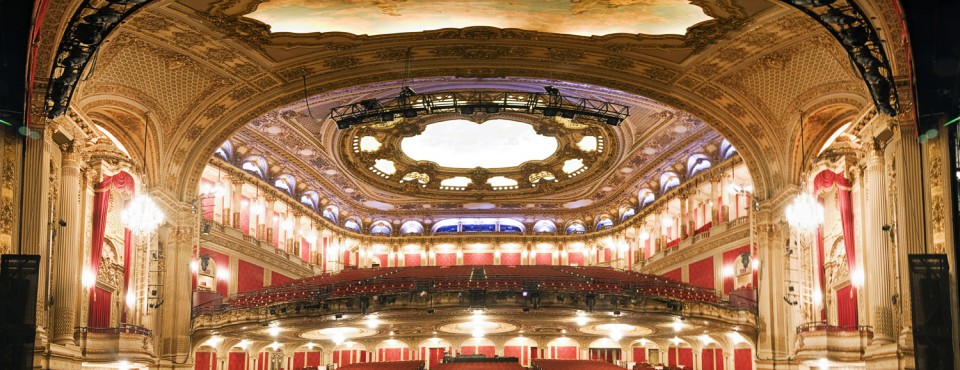
And this is where we find Un Ballo in Maschera – Riccardo is The Earl of Warwick and Governor of Colonial Boston. And yet, there is nothing remotely American about the score or the feel of the opera. In everything but a few stage directions and in name Un Ballo in Maschera, is the Italian version of Scribe’s Gustave III.
After a hefty Christmas break and three weeks in bed with the flu, Opera Miscellany returns with an opera that is very close to my heart. Verdi’s Un Ballo in Maschera (Ballo). Why the personal connection? Well, I sang the role of Amelia in one of the opera’s odder reincarnations – a soap opera romp, set in IKEA, with such timeless lines as “a spot of dogging to keep things fresh.”
So what’s the real thing about then?
Well, Riccardo is governor of Boston (King of Sweden), but only by the skin of his teeth, there is a rather large contingent of plotters (headed up by a chap called Tom and a rogue called Samuel) set on killing him. Renato is the governor’s (king’s) best friend and is married to the lovely Amelia. The governor (king) also has a faithful page – Oscar – who is, rather confusingly, played by a light soprano. Oh, and there’s a witch in the mix too – Ulrica.
Act One sees Riccardo celebrating the upcoming ball. As he peruses the list of invitees he gets all moon-pie-eyed upon spotting the name of Renato’s wife.
Riccardo is not the ideal friend it turns out, and has been coveting Amelia for a while. Renato turns up and tries to warn Riccardo that there is a plot to kill him, but Riccardo is having none of it.
Just then, a complaint is made to Riccardo about a local witch. The magistrate calls for her to be banished, but the page Oscar, who thinks she is quite fabulous, appeals on her account.
Riccardo tells the assembled crowd that he will see for himself, and that anyone who is up for it should join him at her house later on to witness her alleged witchcraft.
On to the next scene. Ulrica is busy summoning the spirits and demons…
…when Riccardo, disguised as a sailor, turns up to have his fortune told. The rest of the courtiers haven’t arrived so he hangs around and subsequently overhears Amelia who has come to seek the witch’s advice.
Poor old Amelia pours her heart out to Ulrica, admitting that she is in love with a man who is not her husband, but his best friend. She asks the witch to help her put her yearning heart at ease. Ulrica sends her off to the executioner’s field where she must gather a secret herb at midnight – this will put an end to her extra-marital desires. Having heard all this, and knowing Amelia wants to stop loving him completely, Riccardo still decides it’s a great idea for him to turn up at this field too, and declare his love.
Exit Amelia and enter all the governor’s entourage (courtiers). Riccardo – still in disguise – asks Ulrica to predict his future. She goes all funny and tells him that he will be murdered by the next man to shake his hand. Ever jovial, Riccardo laughs it off…he offers his hand to the assembled crowd, but no one dares shake it. In comes Renato, late to the party, and shakes his friend’s hand in greeting – Uh oh…
On to Act Two…
Amelia is in the field and she’s a wee bit scared about everything in life really. She has a sing about it.
Then, lo and behold, the last person she wants to see right now rocks up – Riccardo. He declares his passion for her and forces her to admit she loves him. That done they sing a rather lengthy love duet.
No sooner is that over with then Renato turns up to warn his friend that the plotters, who still want him dead, are close at hand. Mortified Amelia hides beneath her veil.
Riccardo, in a show of particular stupidity, decides the best thing is if Renato leads the mysterious lady he is dallying with back to town. One condition, he must not ask who she is, nor ask her to remove the veil. Renato promises to fulfil his friend’s wish, assuming Riccardo is having an affair with someone’s missus and it’s best for all concerned if no one knows who she is. Exit Riccardo.
Now the plotters turn up.
In the skirmish Amelia’s veil is thrown back and Renato realises that Riccardo’s dalliance is his own wife. The plotters, thinking Renato and his wife are having some al fresco romance, have a good laugh about it. Renato is heart broken.
Act Three
This kicks off with some stunning Verdi. A tragic scene plays out between Amelia and Renato. Furious, Renato vows to kill his wife. She kneels before him accepting her fate, but begs that she be allowed to see their son one more time before Renato takes his revenge…
Her plea stays his hand. He finds he has no strength to kill her, but vows that Riccardo, whose fault it is, must die. He sings a hugely famous aria about Riccardo’s betrayal…Eri tu…
At Renato’s behest the plotters, Tom and Samuel, arrive. Renato asks to join them. He pledges his own son’s life as a show of his sincerity. They all want to be the one to strike the killer blow, so they write their names and toss them in a hat, the winning name must be picked. Enter Amelia, who Renato forces to pick the winner. She draws Renato’s name. As he celebrates his victory, she realises what is going on. Her husband is going to murder Riccardo.
In comes the oblivious Oscar to invite them all to the masked ball that night, it is decided that Riccardo will meet his fate at the party. A lovely little sing song ensues.
It’s just before the party, Riccardo is doing some soul searching and decides he must send Amelia and Renato away to save them from him. He will ship them off to England. He writes Amelia a letter…
The party starts. Everyone is masked and in fancy dress. In the confusion Renato has no idea who he is meant to stab. The page, Oscar, who knows what Riccardo is wearing, taunts him with what sounds a bit like a “na na nana na” aria…
Only then, Oscar accidentally lets the vital piece of information slip – Riccardo is wearing a black cloak with a red ribbon.
Riccardo has found Amelia in the crowd. She tries to warn him that Renato is going to kill him, that he thinks that they are having an affair, but Riccardo silences her by letting her know he is sending both her and hubby to England. Just as they are saying their tearful goodbyes Renato stabs Riccardo.
On his deathbed Riccardo reveals that they never actually had an affair, he forgives Renato and dies as the latter cries out his name.
Firstly, I would like to say how indebted I am as a Wagner novice to the YouTube channel ‘Wagner Leitmotifs’ which is well worth looking at. It helped me find my way in to the operas.
Here is a link to all such musical themes that occur in Tristan und Isolde:
I didn’t take to Wagner naturally, I know lots of people do, but I also know that many people are like me; put off by the absence of ‘tunes’ so-to-speak.
The thing about me, is that I am also a geek, and the idea of getting into Wagner’s own sound world and playing spot the motif quite appealed. Have a listen to all those little YouTube snippets. Then you can listen to the opera with your ears pricked for them. I’m not saying this is the best way to listen to Wagner but it really is a great game and a good way to understand what Wagner was trying to do with opera.
A quick word on Leitmotifs…
So, a leitmotif is a little snippet of music that is linked to a character, a place, an emotion, a couple etc. etc. Wagner opera’s are built of such motifs and become like a sound map. Every time you hear one of these sounds it is supposed to elicit certain feelings. This way, either subconsciously or consciously (depending how deeply you study these things), the listener feels draw in by the orchestration rather than feeling alienated by its seeming lack of tonality.
Wagner revolutionised the musical scene with these new ideas, and they can be seen beginning to permeate other forms of operatic output of the period. Puccini got in trouble with Italian audiences for being too Wagnerian in his use of leitmotifs. They are particularly apparent in Tosca.
Back to Tristan und Isolde…The opera was composed during a rather turbulent period for Wagner. He was 44 and had no money. It was five years since his last opera, Lohengrin, had been performed. He still had dreams of getting the Ring commisioned, but these were withering.
So he hit upon the idea of writing Tristan und Isolde. He wrote to Liszt:
“As I have never in life felt the real bliss of love, I must erect a monument to the most beautiful of all my dreams, in which, from beginning to end, that love shall thoroughly satiated. I have in my head “Tristan and Isolde,” the simplest, but most full-blooded musical conception. With the black flag which floats at the end of it I shall cover myself to die.”
Liszt was taken with this and wrote back encouragingly…further good news and encouragement came from the Emperor of Brazil, who told Wagner to write an opera, bring it to the Italian Company in Rio Janeiro, and he could have all the resources he needed to get it staged. Wagner had to turn him down. Italian opera singers, he believed, would never be able to get through his music.
Luckily (or not so if you happened to be Wagner’s wife, Minna), he received an invite to stay with his wealthy friends, the Wesendoncks. He and Minna moved into the small cottage on their estate. This is where he began having an emotional (if not physical) affair with Mathilde Wesendonck. So while composing Act One of T & I there was certainly a great deal on his mind. Unrequitable love was definitely the theme of the hour. By 1858 he and Minna were in a state and he left her, and the Wesendoncks, and headed to Venice, where the second act of the opera was composed.
Wagner had other troubles too. He was wanted for revolutionary activity, and so had to travel carefully. When he finally found a city he was safe in, with an opera house keen on giving T & I a go, Vienna, it turned out he had composed another Ring; an opera that it seemed impossible for singers to grasp in the time they had and impossible to stage.
He was utterly disheartened. The tide didn’t turn until patronage arrived in the form of 18 year old Ludwig II, newly crowned King of Bavaria. Wagner had grabbed his attention with a new (1863) edition of his Ring poem; in the preface of which he called for a “German prince” who might help him realise his vision for a new German opera. In 1964, shortly after his coronation, Ludwig answered Wagner’s prayers. He commissioned the Ring and set about providing Wagner with as much money and as many resources as he could possibly need to ensure the first performance of Tristan un Isolde.
The opera was highly successful, and remains a firm favourite today. For me, the key to it was allowing myself to get utterly lost in the music. The overwhelming sound world is so beautiful and moving if you give yourself up to it entirely.
It also might help to have a look at some of Wagner’s writings to understand his project. Here they (well some of them) are:
From the frothy glee of Donizetti to the dark rich resonance of Wagner. Get your beard out, it’s time for Tristan und Isolde at the Royal Opera House.
Isolde is on her way to England, Cornwall to be precise, on a boat captained by Tristan, who killed her fiancé in battle, and is now merrily shipping her off to be married to his good friend and uncle, King Marke.
The opera starts with a plaintive song about a wild Irish maid, which, Isolde is convinced is a cheap dig at her – rather beautifully sung below, no video I’m afraid!
She get’s pretty angry and sings some rather wild notes of upset while wishing the whole boat would just sink. Her handmaiden (need a few of these in Wagner), Brangäne, is on hand (see what I did there) to try and cheer her up a bit. Isolde’s not much in the mood for that though, she’d rather get on with poisoning Tristan, so she commands Brangäne to go and get him.
Tristan, unsurprisingly, is less than keen for a quick chat with crazy Isolde and tells Brangäne as much.
Brangäne explains that Tristan isn’t coming out to play and so Isolde, now really quite irate, tells a tale of how, during the fighting, she came across a dying stranger on a barge who told her his name was Tantris. She used her healing powers on him, before realising he was actually Tristan, murderer of her lovely man. She was about to undo her good works with a big old sword when their eyes met and she couldn’t kill Tristan after all. Tristan promised to leave and never come back as a sort of thank you for the life saving/sparing.
This is most of that… a bit long but very beautiful, again no video!
This is why she Isolde so monumentally miffed. Not only did he come back, he decided to marry her off to his overseas mate. Moreover, this guy who owes her his life won’t even come for a catch up. Terrible manners…besides, she really wants to poison him. Brangäne is a bit disturbed by that idea, but doesn’t say much…well, not too much.
In comes Kurwenal, one of Tristan’s men, to announce that they are nearly there. Isolde swears that she will not appear before her new husband-to-be unless Tristan comes over right now and they have a drink. Soon Tristan shows up. Isolde tells him he’s been very naughty and must drink atonement to her. He knows she is probably trying to kill him, so offers her his sword. She’d rather not go down that route again, it didn’t work first time, no, no, they really must have a drink. Deciding there’s not much he can do Tristan drinks the potion and Isolde takes half for herself…
Pretty short opera if Isolde had got her way, problem is, Brangäne has been fooling around with the various bottles and has substituted poison for love potion. So now Tristan and Isolde are wildly, madly, passionately in love with one another.
Here’s from the moment they drink the potion until the end of the act…
Everyone is in Cornwall enjoying (enduring) the hospitality of King Marke. Luckily for the lovestruck one-time enemies, a hunting party is taking place and they’re pretty sure they can get away with a secret tryst.
Isolde and Brangäne remain in the castle and, when Isolde puts out the burning brazier, it will be Tristan’s signal to come to her for some more love chat. Isolde is pretty impatient, but Brangäne warns her that Melot, one of King Marke’s men has spotted Tristan and Isolde exchanging dough eyed looks and knows something is going on. Isolde is too randy to heed the warning and extinguishes the fire.
Brangäne leaves them to it as Tristan arrives. They finally have a chance to properly declare their love for one another.
It’s a lot of talking. They call for the night Tristan has a rant against daylight, crying out that it is only at night that they can truly be together. Then together they realise the truth that only the long night of eternal death can truly unite them.
As things go on, and beautifully on, the day starts dawning. Brangäne calls out to the saucy pair that day is coming and they need to wrap it up, but they seem incapable of paying attention.
As the sun comes up, Melot leads Marke to where the lovers are canoodling.
Marke is understandably upset, but, strangely, not just at his nephew Tristan, but also at Melot for betraying said nephew.
Tristan accuses Melot of also loving Isolde which leads to a big fight. It’s al getting a bit hot and bothered when Tristan throws aside his sword, allowing Melot to fatally wound him.
Act Three
Tristan is back in Brittany with faithful Kurwenal, where a shepherd is piping a doleful tune.
He is dying. Kurwenal tells the shepherd boy that the only thing that might bring him back to life is Isolde’s arrival. Tristan wakes up and laments his fate…
He cheers up when he finds out his best beloved is on her way…then get’s sad again and muses on the sad shepherd song that is playing and was playing at the deaths of his parents.
Suddenly the shepherd changes his tune to announce the arrival of Isolde’s ship. Kurwenal rushes to get her, but all in vain. Tristan gets over excited, rips off his bandages in delirium and dies crying out his lovers name just as she gets there.
Then another ship appears on the horizon; it’s Marke, Melot and Brangäne. Kurwenal thinks this is dreadful news and launches an attack on Melot to avenge Tristan. They manage to kill each other even though Melot was only coming to apologise.
Marke and Brangäne arrive at the scene of Tristan’s death and Marke reveals that he now knows everything and had actually come to give his blessing to the lovers. Isolde wakes briefly, then dies: but not before singing the Liebestod, a stunning aria about her vision of Tristan risen from the dead….here it is…gorgeous!
So… one of the most performed operas of all time, jammed pack of famous tunes, what more is there to say?
Well, there are some interesting facts about the whole shebang you might need at a dinner party, so, here goes…
Puccini was just coming to the fore as a leading opera composer when he hit the ground hobbling with slow burner of a hit La Bohème. And not without some prior scandal and hesitation and a lot of argument either.
Leoncavallo, Puccini’s rival (and trust me, Puccini was insecure enough to see him as such), had offered Puccini a libretto for an opera based on Murger’s novel Scènes de la vie deBohème. Puccini had pooh poohed it, and now Leoncavallo was writing it himself. When he discovered Puccini’s intention to write one too, he was not best pleased and took his story to the local press. Shortly after the Secolo published Leoncavallo’s intention to present a new opera entitled La Bohème;Corriere della Sera published Puccini’s – needless to say it was a little bit messy.
Things were only made messier by the fact that Puccini kept getting fed up with writing La Bohème, and was pretty busy travelling from opera house to opera house to oversee various productions of ManonLescaut.
In fact he told many people he was packing Bohème in on various occasions.
At one point, he and one of the librettists working on Bohème, Illica, got in such a tiff about the project that Puccini upped sticks and went on a sojourn in Sicily to try and write another opera, La Lupa.
Puccini wanted to get rid of Mimi and Rodolfo’s great break up and have them still together at the start of Act III; Mimi dying in the shabby garret. Illica said, no deal, rightly surmising that this would undermine the complexity of Murger’s original and turn the whole thing into a kitchen sink drama, or, in his words: “a pitiful story…a tear jerker…but not La Bohème...[which is] more complex than that.“
Eventually, Puccini gave up on La Lupa (much to his publisher and benefactor, Ricordi’s, annoyance) and work on La Bohème (now very overdue) continues. But all was not well between composer and librettists. Puccini even tried to hire a new librettist through the back door, without even telling Ricordi. Plus, the second librettist on the project, Giuseppe Giacosa, was having trouble coming up with a libretto for Act III that anyone could agree on.
Anyway, when La Bohème finally did get up and running it was hardly an instant success. The premier in Turin had terrible reviews, but it seemed to pick up steam with each new production.
Then, Leoncavallo’s version of Bohème premiered in Venice, and was a flop. Puccini was unbecomingly smug about this, even composing a poem about his friend’s failure (and they say schadenfreude is a German thing).
Puccini had, perhaps unknowingly, composed a masterpiece. What seemed like a none-story was to become one of the most performed and touching operas of all time.
It’s taken on many, many guises – from a televised film version with Anna Netrebko to a shabby heart wrencher in a North London pub – but the Jonathan Miller version that is about to start (once again) at the ENO is a classic of a classic. It has everything you want from a La Bohème and no directorish ego in the way. Many people say Miller is a genius, I am not sure about that – I think he is just very good at doing exactly what is on the page, and seeing as Puccini, Illica and Giacosa were pretty good at their jobs, that’s quite enough!
Another Christmas, another La Boheme at the English National Opera. One of Puccini’s most famous operas, you could say it needs no introduction, especially Jonathan Miller’s acclaimed production.
It’s not the most tricky of plots, so let’s whistle through it…
This is the story of Rodolfo, Mimi, Marcello and Musetta and a few other young students, and their precarious existence in Paris in the early nineteenth century.
It is Christmas Eve and Rodolfo (the writer), and Marcello (the painter), are awaiting the return of their flatmates: Colline (the philosopher), and Schaunard (the musician). They are complaining bitterly (but also playfully) about the trials of the bohemian life. They have no money, and not enough talent it would seem, as they decide that Rodolfo’s latest novel is best served burnt in lieu of firewood.
The other flatmates return and Schaunard has some hard cash. He tells the story of how he earned it – playing to a parrot.
At this moment the landlord, Benoit, arrives demanding the rent. Instead of paying up while they are in the black, they get him drunk and blackmail him, throwing him out of the house.
They all go off to the local café to drink away some of Schaunard’s money. Rodolfo stays behind as he needs to finish up a piece of writing he is actually getting paid for. There is a knock on the door. It’s Rodolfo’s attractive next door neighbour whom he has never seen before. Her candle has gone out and she is asking for a light. He obliges; off she goes while he stares puppy eyed after her.
She is soon back, having accidentally dropped her key in his flat. Both their candles go out. They scrabble in the dark to find the key. Rodolfo finds it but pretends he hasn’t so that he can by time to chat up Mimi, who reveals she is a seamstress who loves making silk flowers.
The (now inebriated) friends turn up under the window and call for Rodolfo to get a move on. He tries to convince Mimi to spend the evening in the flat with him instead, but she meekly asks why she cannot just come out with them. He agrees and away they go.
Act II opens amid the chaos of Paris at Christmas: screaming children, jabbering mothers, street sellers etc. Rodolfo buys Mimi a pink bonnet.
Inside the café everyone is enjoying themselves when in struts Musetta with an old rich man in tow. She is Marcello’s ex-girlfriend and is on a mission to make him jealous. She does so by singing to the whole bar about the power she has over men.
It works. She sends the old rich man off to get her shoes fixed and lumps him with Marcello’s bill, and the students, Mimi and Musetta all go and watch the Christmas procession.
Swiftly on to Act III. Mimi and Rodolfo’s relationship is undeniably on the rocks. Mimi has come to try and find him at the bar where Marcello and Musetta are now living while the painter finishes painting all its signs, and Musetta sings to the clientele.
Mimi begs Marcello for help. Rodolfo is jealous and moody and the whole thing is falling apart. He tells her they should split up because they are clearly not suited; he boasts about how amazing he and Musetta’s relationship is. She agrees they must call it quits, but explains that whenever they try to part, they end up back together again.
Rodolfo begins to wake up and Marcello shoos Mimi away, he doesn’t want a scene at his new place of work. Rodolfo pours his heart out to Marcello, saying he is trying to get Mimi to leave him for a rich man because she is terribly sick, and he can’t afford to heat their room or to buy her the decent food she needs to get better. In fact, he explains to Marcello, he is convinced she is dying. Unbeknownst to either of them, Mimi has overheard it all. She is unmasked by a coughing fit.
Rodolfo and Mimi agree to stay together until the Spring. While they move towards reconciliation, Marcello overhears Musetta giggling with the clients in the bar and goes into a jealous rage. By the end of Act III the tables are turned. Mimi and Rodolfo are as strong as ever and Marcello and Musetta are in a mess.
And finally…Act IV. All couples are parted. We are back in the student’s flat. Marcello can’t stop painting Musetta and every time Rodolfo tries to write he is plagued by Mimi.
In come the rest of the lads and there is cause for merriment, they have a mock banquet with the pitiful food they have. They begin play-fighting and the dual is in full swing when Musetta barges in. Mimi’s rich boyfriend has abandoned her and she really is dying. She is trying to get up the staircase to the flat.
They bring Mimi up. Musetta runs to buy her some gloves. Colline rushes out to pawn his old overcoat to buy her medicine.
But it is all in vain. After some beautiful music…
…she dies, as Rodolfo cries her name.
If you watch this from about 8:50 you get the final Mimis!
A little but about Donizetti (29 November 1797 – 8 April 1848), Bel Canto and Elisir.
Donizetti’s operas, Elisir included, are written in what is known as a Bel Canto style. Bel Canto roughly translates as “Beautiful Singing” and was the operatic writing style of the age (the first half of the nineteenth century). Rossini, Bellini and Donizetti are it’s best known proponents. Listening to a few of their operas will give you some idea of what it is all about, but here are some very famous examples; the first is from Donizetti’s later opera, Lucia di Lammermoor, and the second comes from Rossini’s Barber of Seville…
It’s a style of singing more than anything, but the works of these composers live and die with it. It’s characterised by all those light airy runs and jumps, it is music that sounds as though it is shimmering. For a singer it’s the idea of a very tiny, very clean, crisp and flexible sound that pings over the orchestra. It’s the antithesis of Wagnerian or Puccini singing in many ways (though they grew out of it and are indebted to it). Many (if not most) vocal teachers still see it as the backbone of good singing, especially in Italy.
So what was Bel Canto in it’s day? Well, it was the equivalent of our pop music, or the most famous musical theatre of the mid-nineteen-hundreds. It was incredibly popular and the best singers became stars, along with its best composers. Donizetti became a musical superstar.
He had it all – comedy in bag loads, Elisir, Don Pasquale etc. and fantastic and glorious tragedies, Lucia di Lammermoor, Maria Stuarda…
L’elisir d’amore was composed in 1832. Smack bang in the middle of Donizetti’s oeuvre. So by this time he was a pretty mature artist, but some of his greatest works were yet to come. It was also the product of a great collaboration. Donizetti and the librettist Felice Romani worked extremely well together, Elisir was their seventh opera as an item, and Romani had helped Donizetti get his first big hit, Anna Bolena.
Highly entertaining, composed by the man of the hour, and with one of the most beautiful tenor arias ever written, Elisir bound to go down a storm.
Which is not to say that Donizetti was without his concerns. He apparently commented “it bodes well that we have a German primadonna, a tenor who stammers, a buffo who has a voice like a goat, and a French basso who isn’t up to doing much.”
The opera itself takes several of the ideas of Opera Buffa – early operas that were more like pantomimes and made use of often quite mean spirited stock characters – and reimagines them.
Elisir’s characters are not two dimensional. Despite their cartoonish qualities and pointed names* they are genuine and all have the ability to change and show different personality traits, even the bawdy Dulcamara and the self-loving Belcore have soft moments – Dulcamara’s chats with Adina, Belcore’s pondering when Adina won’t sign the marriage contract.
Ostensibly a comic riot, the opera is full of light and shade. These nuances are what distinguish Bel Canto comedies from their pre-Mozart Italian predecessors (Pergolesi etc.). In a way it is almost impossible to see how they could not be more subtle. Even in rip-roaring comedy Bel Canto music constantly strives towards beauty, flow and perfection.
* Adina – Hebrew for refined, Belcore – from the Italian ‘beautiful heart’, Dulcamara – ‘sweet sour’ in Italian and Nemorino – ‘little nobody’ in Latin…all names that both sum up the characters, but also are undermined by their actions in some way.
Ah yes, L’elisir d’amore – Donizetti’s homage to the booze.
Adina is beautiful, successful and strong willed, Nemorino is a little slow, a bit wet and poor to boot – so operatically speaking, they are a perfect match. Nemorino adores the land owner Adina (and tells her so, a lot…), Adina is, to put it mildly not interested.
Hapless Nemorino overhears her reading the story of Tristan and Isolde to her workers one day and becomes fixated on the idea of a love potion. If he had a bit of that he could certainly win the girl. Unfortunately he hasn’t cottoned on to the fact that love potions don’t actually exist.
Anyway, this story needs a rival, roll up, Belcore. He fancies himself more than anyone else probably ever will, is a sergeant in the army and, of course, decides to court Adina while the whole village look on. He and Nemorino are chalk and cheese.
Feeling anxious, Nemorino declares his undying love for Adina in a moment alone. She laughs it off, telling him that she intends to love someone new every day and that if he wants to be happy he should do likewise.
Cue the arrival of a travelling quack doctor and salesman extraordinaire. Dulcamara is selling his ‘cure-for-all’ elixir, and boy is he good at it…
Soon he’s nearly sold out. But, as he’s about to do a runner (before the whole town realise he’s sold them cheap wine) Nemorino corners him. Nemorino enquires humbly whether the salesman has any of Isolde’s love potion. Dulcamara has no idea what he’s on about, but persuades him to part with all his savings for a bottle of the same stuff he has sold everyone else – cheap wine. He is careful to tell our idiot hero that it will take a good 24 hours to have effect (by which time the salesman will be long gone!).
Nemorino downs it, and, when Adina comes in, he feels bold and, quite frankly, a bit arrogant (he’s drunk). Adina, used to being the centre of attention and annoyed with this oaf, promises to marry Belcore. The wedding is to be in six days time. Nemorino laughs, thinking that all he needs is one day and Adina will be his.
Suddenly, (surprise, surprise!) Belcore is told his regiment must leave the next day. Adina metaphorically sticks her tongue out at Nemorino even further and promises to marry the sergeant that very evening. Nemorino is dumbfounded and cries for Dulcamara to return and help him, for otherwise all is lost.
Act Two begins in a nuptial mood, the wedding party is all go, and Dulcamara, probably drunk on far better wine than that he sells, urges Adina to sing a duet with him about a senator chatting up a boat woman called Nina…
It’s time to go and sign the wedding contract, but Adina cannot stand that Nemorino hasn’t even turned up at the wedding, she is only going through with it all to teach him a lesson, and is now wondering why she bothered. Everyone leaves to sign the contract but Dulcamara remains to take full advantage of a free dinner. In comes Nemorino in a terrible state. He begs Dulcamara for a fast-acting potion, but, upon finding out Nermorino is penniless, Dulcamara leaves in huff.
If only Nemorino could find cash…but where? Belcore comes stomping in, Adina has become stroppy and refused to sign the marriage contract, and he has no idea why. When he finds out the cause of his rival Nemorino’s upset he convinces him that the best way to get some money is to join the army…
Knowing (or thinking he knows) that it is his only chance of winning Adina, Nemorino signs up. Belcore, meanwhile, is baffled that he has managed to dispatch of his rival so easily.
Now comes a sudden twist. The two men have left and Gianetta, Adina’s best friend, arrives with all the women of the village. She tells them (swearing them to secrecy) that Nemorino’s excessively rich uncle has died and left him everything. Nemorino is rich beyond any of their wildest dreams. Now, low and behold, every girl in the village is suddenly taken by feelings of love for Nemorino…
He comes in, tanked up on more elixir, bought with his army bonus, and every woman throws herself at him. He puts two and two together and…even Dulcamara begins to believe in the power of his own deceit, telling Adina that all this is the result of Nemorino taking his love potion for some woman. He asks if she would like some to win Nemorino back, but she assures him that she has everything she needs to win Nemorino in every which way, and he agrees…
When everyone is gone Nemorino sings the most famous aria in the piece. Here’s an exquisite version for you…Una Furtiva Lagrima (A Secret Tear)…
Nemorino is convinced that Adina must be in love with him cecause he saw her crying while he was ignoring her for all his new lady friends. Just then, she comes in, she has bought back his commission from Belcore and he does not need to join the army. She turns to leave and he loses his faith in her love. He declares that if she does not love him he may as well go to war. She admits that she does love him and they embrace.
Enter Belcore, when he learns he has lost he is not exactly bothered. After all, there are plenty more fish in the sea as far as he is concerned.
Dulcamara explains that his potion has made Nemorino not only happy in love, but also filthy rich, and the opera closes with everyone queuing up to buy some more cheap wine from the amazing physician, Dulcamara.
Now on at the good old ENO is The Marriage of Figaro (Le Nozze di Figaro but I’ll refer to it in English as it will be sung in English). And, if you want to know a bit more about why it’s often hard to catch singers’ words in opera, have a read of this:
We’ll try and mix some history and context in this time.
So more Mozart…
Undoubtedly one of his most famous operas, The Marriage of Figaro tells the story of the servant girl, her fiancée, his boss, his boss’ wife, the old battle-axe who wants to marry the fiancée, her lawyer and one time lover and a few bumbling tenors.
It’s basically a good old fashioned farce, but there is a good deal of really powerful drama in there too. The libretto is loosely based on a play by Beaumarchais which was censored for being to salacious. In Mozart and Da Ponte’s opera the sauciness is definitely bubbling away, but the comedy comes from the true silliness of being human.
The opera starts a few years after Rossini’s The Barber of Seville (also based on a Beaumarchais play) finishes. Count Almavira is married to the lovely Rosina, and it is his best friend Figaro’s turn to get hitched, to one of the Count’s longest serving maids, Susanna.
The Count has given them a huge suite in his palace which Figaro is measuring with glee because he wants to know if the huge bed his ‘friend’ has also promised him will fit in the middle of it – his mind is clearly no longer in his head. Meanwhile, Susanna is preoccupied with her new wedding bonnet. Basically, they are a right pair, the perfect match, and very different protagonists from Mozart’s regular high minded ladies and gentlemen (musically as well as dramatically).
When Susanna discovers that this is the room they have been designated in the house she is not happy. She tells Figaro that the room is far too close the Count’s room for her liking and that she is very uncomfortable about it because the Count keeps making advances. She explains that Figaro’s so-called best friend has been sending her love songs etc. through her singing teacher (a ruse Almavira played to win his wife Rosina in Barber), and wants to reinstate his feudal right to have first dibs on the wife-to-be of his man-servant. Figaro, needless to say, is displeased and vows revenge. He sings (for the first time) one of the most famous little melodies in the whole damned thing…
…this roughly translates as “If you wanna dance ‘little’ Count, I will play the little guitar.” Casting-wise, Figaro should be a big butch soldier and the Count a skinny aristocrat.
Cut to Marcellina and Bartolo. Figaro isn’t the most honourable of cads himself and has borrowed a large sum of money from the old maid Marcellina. If he doesn’t pay it back, he has to marry her. She’s turned up the day before his wedding night to claim her dues (which, of course, he doesn’t have). She has appointed her former boss, Bartolo, to be her lawyer. Incidentally, the same Bartolo that, in The Barber of Seville, wanted to marry Rosina before Figaro’s tricks tied up her marriage to the Count. Unsurprisingly therefore, Bartolo is only too happy to help Marcellina out and, in so doing, take revenge. He sings about it in fact…
In comes Susanna, just as Bartolo leaves, and her and Marcellina have a good old fashioned “age before beauty” cat fight. It’s a wonderful little duet, roughly it translates as “no, no, after you…” Being snide has, apparently, been around for centuries.
Just as Susanna is waving her fists after Marcellina, Cherubino comes in. The whole collection of human life would not be complete without a randy teenage boy. It turns out that this particular young scallywag has been caught canoodling with a randy young teenage servant girl and that the Count has dismissed him. Cherubino is basically on heat and fancies anything in a skirt, but the Countess is undoubtedly his favourite. Here he is singing about his sexual frustration…Oh, and by the way, he’s played by a girl (would have been a castrato)…
Just as Cherubino is about to head off he spies the Count coming in. Cherubino is not meant to be in the Palace, let alone in Susanna’s bedroom. So he panics and Susanna hides him behind the large sofa that is the only piece of furniture specified as being in the room.
The Count starts coming on to Susanna pretty strongly, she attempts to rebuff him. And then, low and behold, someone is coming. The Count doesn’t want any trouble so he decides to hide behind the sofa as well. Susanna stands between the two stowaways, Cherubino runs round onto the sofa and hides under a dressing gown. In comes Basilio.
To cut a messy scene short, Basilio then starts chatting up Susanna. The Count becomes increasingly irate. Eventually it is all too much and up he jumps and a rather accusatory trio begins. During it, Susanna faints and Cherubino is, yet again, discovered by the Count, right in the middle of him telling everyone how he discovered the youth with Barberina in the first instance.
After which the Count is pretty angry at both Cherubino and Basilio. This is when Figaro turns up with a bunch a country-types all singing about how great the Count is for getting rid of the feudal rights. He scores points for guilt tripping his old mate, certainly.
Everyone leaves apart from Figaro and Cherubino. Cherubino has now been told he must join the army by the Count. Figaro sings him a song of army courage, pointedly designed to make him feel far worse about it al,l as a punishment for chatting up Susanna.
 Opera Miscellany