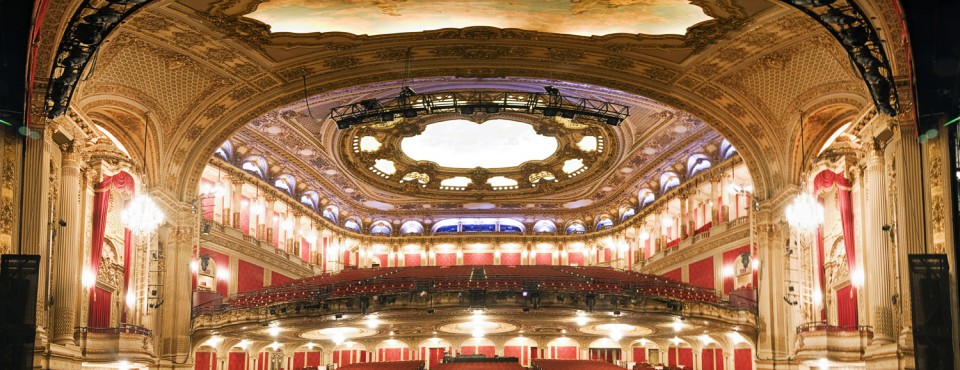
So what’s all this King of Sweden/ Governor of Boston business about? Which is Riccardo?
Well, the truth is, both and neither.
When Verdi set about writing the opera it looked like a reasonably simple task. The librettist – Antonio Somma – would take a previous French libretto, by a chap called Eugene Scribe – for an 1833 Aubers opera, Gustave III, ou ball masque – translate and re-write it a bit, and hey-presto, Verdi could get cracking.
Sadly, it didn’t work out that way. Gustave III tells pretty much exactly the same tale as Un Ballo in Maschera, except the main character is Gustave, King of Sweden, who was assassinated in 1792. Somma even retained the fictional characters that Scribe wrote into the libretto for Gustave – Amelie (Amelia) and Oscar – as well as the factual ones, Ulrica, Anckarstrom and Gustave. So why bother relocating the whole thing to Boston? The answer: censorship.
When Somma’s translated and fiddled Gustave III was presented to the Naples censors in 1857 they rejected it. It was out of the question to show a monarch on the stage, and particularly a monarch being assassinated. So it was back to the drawing board.
Somma set about relocating the whole thing in Germany, Gustave became the Duke of Pomerania, the assassin Anckarstrom became Count Renato, and the opera’s name changed to Un Vendetta in Domino.
This new version of the opera which Verdi had basically completed, (he was busy with the full score orchestration) was presented to the Naples censor again in 1858. The slight problem was, three Italians had just attempted to assassinate Napoleon III in Paris.
Again, the opera was rejected by the censor. Now Verdi lost his cool. Breaking his contract with the San Carlo in Naples, he returned home and gave up on the whole thing. This led to a big old legal battle and mud-slinging contest between Verdi and the San Carlo.
When this was finally sorted, Verdi took his opera to Rome, it was Gustave III again; all the names changed back. The censor did not approve. Finally, it was agreed that the setting would change to North America during colonial times. This was far enough away in time and location for the current political hotbed that was Europe.
And this is where we find Un Ballo in Maschera – Riccardo is The Earl of Warwick and Governor of Colonial Boston. And yet, there is nothing remotely American about the score or the feel of the opera. In everything but a few stage directions and in name Un Ballo in Maschera, is the Italian version of Scribe’s Gustave III.
 Opera Miscellany