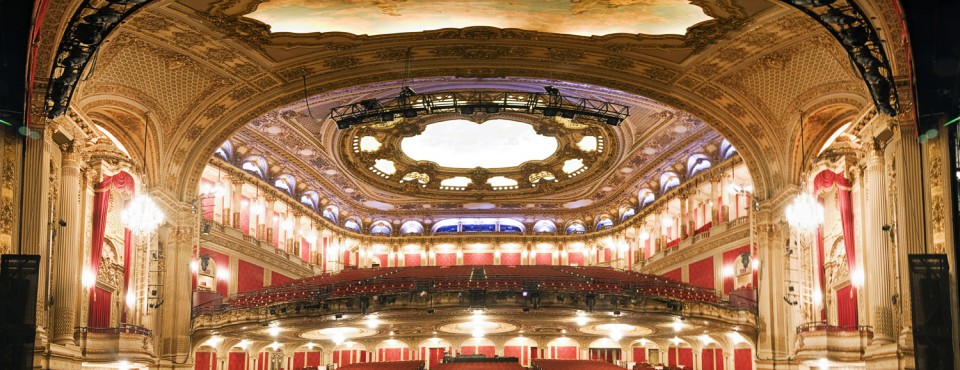
A little but about Donizetti (29 November 1797 – 8 April 1848), Bel Canto and Elisir.
Donizetti’s operas, Elisir included, are written in what is known as a Bel Canto style. Bel Canto roughly translates as “Beautiful Singing” and was the operatic writing style of the age (the first half of the nineteenth century). Rossini, Bellini and Donizetti are it’s best known proponents. Listening to a few of their operas will give you some idea of what it is all about, but here are some very famous examples; the first is from Donizetti’s later opera, Lucia di Lammermoor, and the second comes from Rossini’s Barber of Seville…
It’s a style of singing more than anything, but the works of these composers live and die with it. It’s characterised by all those light airy runs and jumps, it is music that sounds as though it is shimmering. For a singer it’s the idea of a very tiny, very clean, crisp and flexible sound that pings over the orchestra. It’s the antithesis of Wagnerian or Puccini singing in many ways (though they grew out of it and are indebted to it). Many (if not most) vocal teachers still see it as the backbone of good singing, especially in Italy.
So what was Bel Canto in it’s day? Well, it was the equivalent of our pop music, or the most famous musical theatre of the mid-nineteen-hundreds. It was incredibly popular and the best singers became stars, along with its best composers. Donizetti became a musical superstar.
He had it all – comedy in bag loads, Elisir, Don Pasquale etc. and fantastic and glorious tragedies, Lucia di Lammermoor, Maria Stuarda…
L’elisir d’amore was composed in 1832. Smack bang in the middle of Donizetti’s oeuvre. So by this time he was a pretty mature artist, but some of his greatest works were yet to come. It was also the product of a great collaboration. Donizetti and the librettist Felice Romani worked extremely well together, Elisir was their seventh opera as an item, and Romani had helped Donizetti get his first big hit, Anna Bolena.
Highly entertaining, composed by the man of the hour, and with one of the most beautiful tenor arias ever written, Elisir bound to go down a storm.
Which is not to say that Donizetti was without his concerns. He apparently commented “it bodes well that we have a German prima donna, a tenor who stammers, a buffo who has a voice like a goat, and a French basso who isn’t up to doing much.”
The opera itself takes several of the ideas of Opera Buffa – early operas that were more like pantomimes and made use of often quite mean spirited stock characters – and reimagines them.
Elisir’s characters are not two dimensional. Despite their cartoonish qualities and pointed names* they are genuine and all have the ability to change and show different personality traits, even the bawdy Dulcamara and the self-loving Belcore have soft moments – Dulcamara’s chats with Adina, Belcore’s pondering when Adina won’t sign the marriage contract.
Ostensibly a comic riot, the opera is full of light and shade. These nuances are what distinguish Bel Canto comedies from their pre-Mozart Italian predecessors (Pergolesi etc.). In a way it is almost impossible to see how they could not be more subtle. Even in rip-roaring comedy Bel Canto music constantly strives towards beauty, flow and perfection.
* Adina – Hebrew for refined, Belcore – from the Italian ‘beautiful heart’, Dulcamara – ‘sweet sour’ in Italian and Nemorino – ‘little nobody’ in Latin…all names that both sum up the characters, but also are undermined by their actions in some way.
 Opera Miscellany