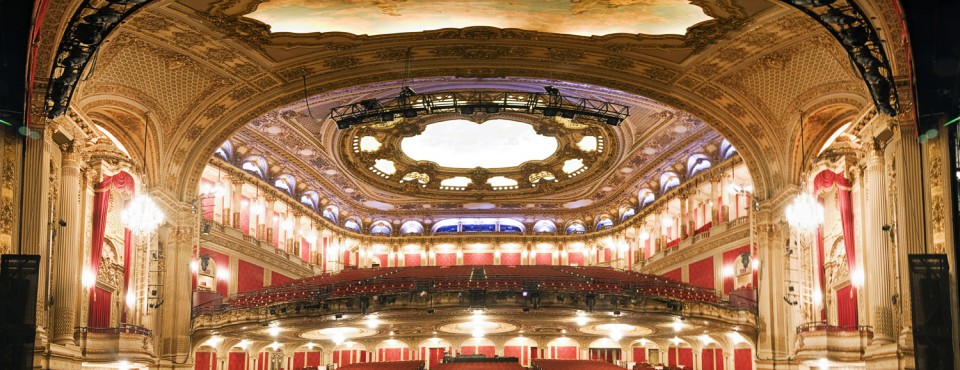
Now on at the good old ENO is The Marriage of Figaro (Le Nozze di Figaro but I’ll refer to it in English as it will be sung in English). And, if you want to know a bit more about why it’s often hard to catch singers’ words in opera, have a read of this:
We’ll try and mix some history and context in this time.
So more Mozart…
Undoubtedly one of his most famous operas, The Marriage of Figaro tells the story of the servant girl, her fiancée, his boss, his boss’ wife, the old battle-axe who wants to marry the fiancée, her lawyer and one time lover and a few bumbling tenors.
It’s basically a good old fashioned farce, but there is a good deal of really powerful drama in there too. The libretto is loosely based on a play by Beaumarchais which was censored for being to salacious. In Mozart and Da Ponte’s opera the sauciness is definitely bubbling away, but the comedy comes from the true silliness of being human.
The opera starts a few years after Rossini’s The Barber of Seville (also based on a Beaumarchais play) finishes. Count Almavira is married to the lovely Rosina, and it is his best friend Figaro’s turn to get hitched, to one of the Count’s longest serving maids, Susanna.
The Count has given them a huge suite in his palace which Figaro is measuring with glee because he wants to know if the huge bed his ‘friend’ has also promised him will fit in the middle of it – his mind is clearly no longer in his head. Meanwhile, Susanna is preoccupied with her new wedding bonnet. Basically, they are a right pair, the perfect match, and very different protagonists from Mozart’s regular high minded ladies and gentlemen (musically as well as dramatically).
When Susanna discovers that this is the room they have been designated in the house she is not happy. She tells Figaro that the room is far too close the Count’s room for her liking and that she is very uncomfortable about it because the Count keeps making advances. She explains that Figaro’s so-called best friend has been sending her love songs etc. through her singing teacher (a ruse Almavira played to win his wife Rosina in Barber), and wants to reinstate his feudal right to have first dibs on the wife-to-be of his man-servant. Figaro, needless to say, is displeased and vows revenge. He sings (for the first time) one of the most famous little melodies in the whole damned thing…
…this roughly translates as “If you wanna dance ‘little’ Count, I will play the little guitar.” Casting-wise, Figaro should be a big butch soldier and the Count a skinny aristocrat.
Cut to Marcellina and Bartolo. Figaro isn’t the most honourable of cads himself and has borrowed a large sum of money from the old maid Marcellina. If he doesn’t pay it back, he has to marry her. She’s turned up the day before his wedding night to claim her dues (which, of course, he doesn’t have). She has appointed her former boss, Bartolo, to be her lawyer. Incidentally, the same Bartolo that, in The Barber of Seville, wanted to marry Rosina before Figaro’s tricks tied up her marriage to the Count. Unsurprisingly therefore, Bartolo is only too happy to help Marcellina out and, in so doing, take revenge. He sings about it in fact…
In comes Susanna, just as Bartolo leaves, and her and Marcellina have a good old fashioned “age before beauty” cat fight. It’s a wonderful little duet, roughly it translates as “no, no, after you…” Being snide has, apparently, been around for centuries.
Just as Susanna is waving her fists after Marcellina, Cherubino comes in. The whole collection of human life would not be complete without a randy teenage boy. It turns out that this particular young scallywag has been caught canoodling with a randy young teenage servant girl and that the Count has dismissed him. Cherubino is basically on heat and fancies anything in a skirt, but the Countess is undoubtedly his favourite. Here he is singing about his sexual frustration…Oh, and by the way, he’s played by a girl (would have been a castrato)…
Just as Cherubino is about to head off he spies the Count coming in. Cherubino is not meant to be in the Palace, let alone in Susanna’s bedroom. So he panics and Susanna hides him behind the large sofa that is the only piece of furniture specified as being in the room.
The Count starts coming on to Susanna pretty strongly, she attempts to rebuff him. And then, low and behold, someone is coming. The Count doesn’t want any trouble so he decides to hide behind the sofa as well. Susanna stands between the two stowaways, Cherubino runs round onto the sofa and hides under a dressing gown. In comes Basilio.
To cut a messy scene short, Basilio then starts chatting up Susanna. The Count becomes increasingly irate. Eventually it is all too much and up he jumps and a rather accusatory trio begins. During it, Susanna faints and Cherubino is, yet again, discovered by the Count, right in the middle of him telling everyone how he discovered the youth with Barberina in the first instance.
After which the Count is pretty angry at both Cherubino and Basilio. This is when Figaro turns up with a bunch a country-types all singing about how great the Count is for getting rid of the feudal rights. He scores points for guilt tripping his old mate, certainly.
Everyone leaves apart from Figaro and Cherubino. Cherubino has now been told he must join the army by the Count. Figaro sings him a song of army courage, pointedly designed to make him feel far worse about it al,l as a punishment for chatting up Susanna.
This is a rather charming version:
And so ends Act One
 Opera Miscellany